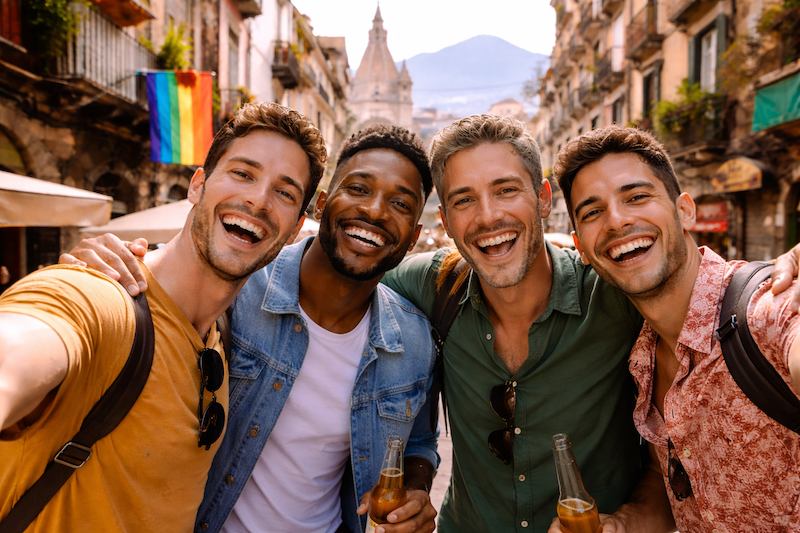
Amazing experience, fantastic guides, great organization. Really unique tours led by incredible professionals. All around amazing experience!
My husband and I booked the tour of the “Vatican in a gay light” for one morning during our trip to Rome. Our guide, Dario, was very knowledgeable of the historical significe of the art works as well as many of the anecdotes that provided context. We learned a great deal and truly enjoyed ourselves. This tour is too notch! Thank you.

Excellent pre-cruise Quiiky tour in Venice. Great guide who had so much intimate knowledge of Venice. Besides being very handsome he is a local resident for more than 2 decades with so much intimate knowledge that you can’t get from a guidebook. This is my second time using Quiiky for tours and transfers; they’re my first choice in Italy!

First I would like to thank you and your company and all involved for a wonderful trip. From beginning to end we continued to be amazed by all the wonder service we received from all of you. We had a fabulous time for our anniversary. All the guides were great and all better than we expected. It is hard to pick a best as they were all awesome, that being said, three stand out for being most personable and had a excellent sense of how to move us along our tours. Quiiky gets 5 out of 5 for all other ratings. Yes, we would positively reccommend for anyone considering travel to Italy. AND, Giovanna, you’re the best.
We appreciate Quiiky incredible attention to detail. We didn’t have to worry about a thing. The drivers Quiiky arranged were always early, communicated with us very effectively and even called the hotels to inform them we were en route. The guides were all incredibly knowledgeable, kind, fun, and eager to answer our questions.
The hotels were beautiful, spacious, and had lots of great amenities. Staff at each hotel were also immensely helpful. We’re happy to be a reference for anyone. We are grateful for all Quiiky did to listen to our specific requests and create an agenda that was perfect for us.

We adored our Quikky tour of the Vatican with our guide Claudio. We had been a little apprehensive about visiting the Vatican but this tour is the way to go! Claudio had an expert knowledge of the art collection and we enjoyed hearing the "other", more scandalous stories of the private lives of Michelangelo and the popes. We loved our visit to the museums, Sistine Chapel, grotto and St Peters - I recommend joining the queue and adding on the view from the dome of the basilica - well worth the stairs!
The excursion to Capri was great! The headphone system worked really well and the guide Andrea was super nice and fun! He was a really good guide and would not hesitate to have him again. The food and drink offerings were very good. Thank you for a wonderful experience!
Overall, we were thrilled with our tour with Quiiky. We were particularly pleased with our guides and drivers in Salerno, Rome, Florence and Venice. And given the crowds in some locations, the front-of-line privileges were particularly welcome. Money well spent!...... I would recommend any of the guides to anyone considering a similar tour. It was these private tours, and the guides’ depth of knowledge, that made all the difference.....Again, we had a wonderful time and would definitely use Quiiky again should we return to Italy.

Thanks for a great alternative tour of the Vatican. Having visited back in 1999 I wanted something a little different to do with my husband who had never visited before. It is great to see Quiiky offering tours with a twist and can most definitely recommend this one for your next visit to Rome.

First had a wonderful pre-cruise Quikky tour in Venice. Our guide was super friendly, knowledgeable, and a great deal of fun. Then I went on a tour of the Vatican and our tour guide was incredible. He is an expert on the Vatican and on the pertinent gay history (which turns out to be much more than you might even think). He literally made the Vatican come alive and provided one of the more fascinating tours I have taken anywhere. And the two wonderful owners of Quiiky picked us up and took us on a vehicular tour of Rome. Others got back from Rome complaining of the crowds and the heat... we got back energized, happy, and filled with fascinating information after an afternoon filled with fun and personalized care. Don't make the mistake thinking you will get an equivalent tour from a straight guide/company -- if you are gay, Quiiky is the way to go.

I highly recommend Quiiky Travel for any guided visit to Rome or Italy. I was both surprised and entertained by everything GAY I learned about the Vatican on my tour. They are passionate about providing an excellent travel experience and I have no doubt that you would enjoy one of their tours or travel products.
What a wonderful experience to Messina and Taormina. Antonio was a great guide with good knowledge and history-telling. Really enjoyed the history of the museum Cusena. Again the food and drinks on the boat were very good. Thank you so much!
Our excursion to Messina and Taormina today was excellent. Antonio was amazing. Our food experience was on point … starting with the granita and Brioche in Messina and the arancini and cannoli in Taormina!!! The boat trip around the bays was spectacular and the food again!!!
Eggplant Parmesan and the sardine dish and olives… Again Antonio was patient , knowledgeable sweet and always on time!! Excellent experience!!!
We had a fantastic tour of the Vatican with Paolo from Quiiky. Paolo was knowledgeable, personable, fun and really gave us a different insight into the history of art and the gay artists that are part of the Vatican’s history and more! Highly recommended!
It was easy to schedule our tour. Everything was explained in great detail, so there was no confusion on the day of the excursion. The vans were spotless and comfortable. Our guide for the Colosseum was exceptional in every way. He was cute, knowledgeable, witty, flexible and engaging. We met so wonderful folks and shared a wonderful lunch with the guys from our group. Could not have been happier with Quiiky.
Fantastic company to work with. Very easy and simple…..and good value. Will definitely book with them again!
BEST TOUR COMPANY YOU COULD WISH FOR!
I have done two tours in Rome with this amazing company and both times it was 20-30 people
Expert process, memorable tours, top notch experience. We arrived by cruise ship and they handled everything.
Regardless of how you arrive you will receive a tour that is personal and you feel like you w learned secrets and things you would never ever have heard or known.
I wholeheartedly recommend them.
Highly recommend Quiiky.com for tours/day trips in Italy. They did an AMAZING job on our tours in Palermo and Naples as well as arranging a wonderful beach day for us when we disembark in Civitavecchia before heading to the airport in the late afternoon.
We were in Venice for a very short time and I was looking for a tour to maximize our experience. Giovanna, the sales manager, was amazing and found a tour to meet our desires and time frame. The guide met us at the train station and took us on a tour of the city. He was insightful and personable and we enjoyed our time together.